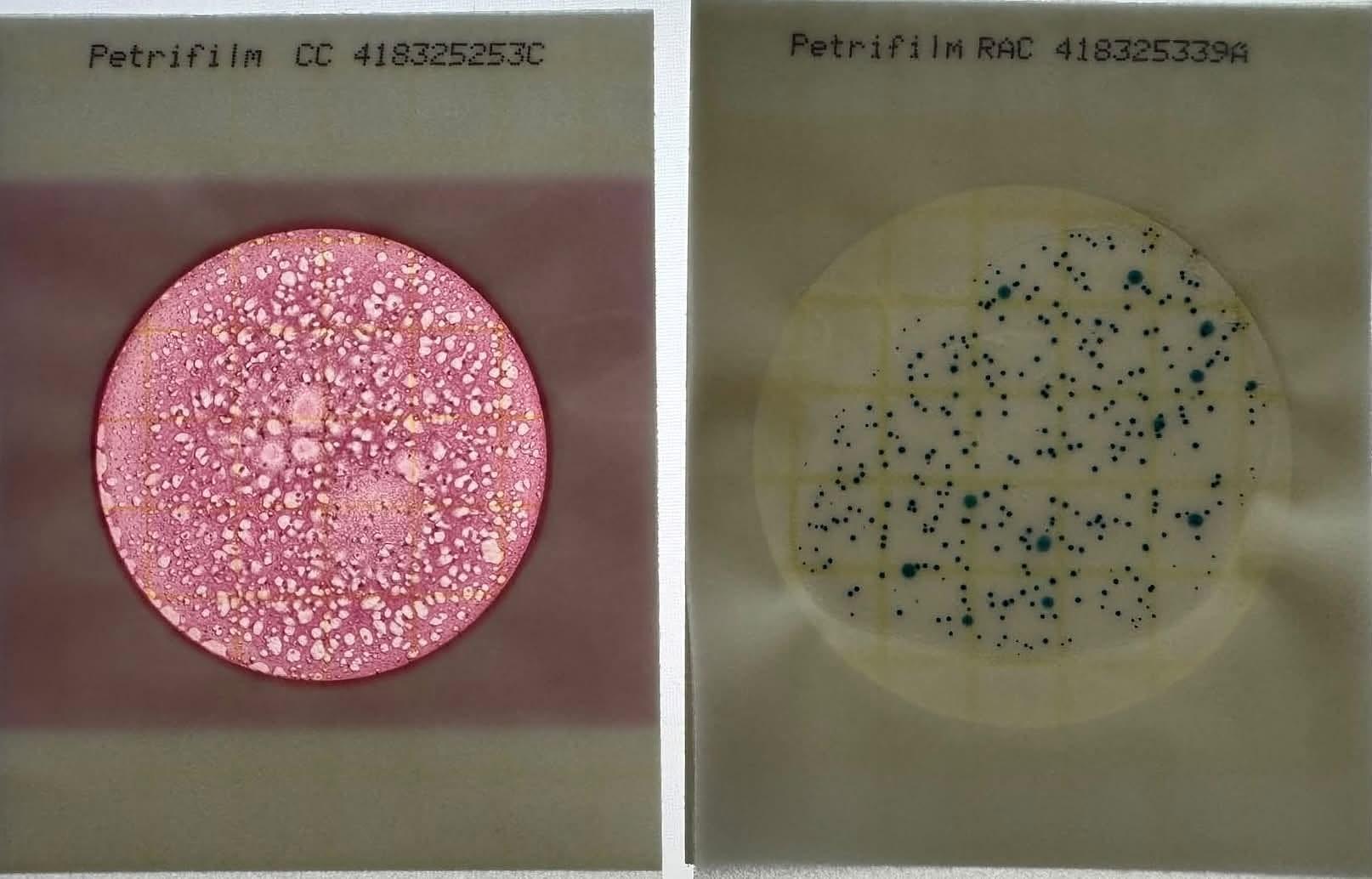
Look at This Bad Raw Milk Test—Would You Know Without Testing?
posted on
August 2, 2026
| |
What Does Raw Milk Quality Look Like Without Testing?The test plates pictured above were shared by another raw dairy that was asking for help troubleshooting unusually high coliform and aerobic plate counts. We are sharing this image for education—not to identify or criticize the farm. By all appearances, this was an extremely clean dairy. The facility looked clean, the equipment looked clean, and the milk may have smelled and tasted completely normal. But the test results revealed a serious problem that could not be seen. Without testing, they would not have known. High bacterial counts do not automatically prove that a pathogen is present, but they are an important warning that something in the process needs immediate investigation. The cause could involve cleaning procedures, cooling, water quality, worn equipment, damaged components, or hidden bacterial biofilms. Clean Is Important—but Clean Alone Is Not ProofWe often say: Clean is important, but clean means very little without testing. Biofilms can develop inside hoses, valves, inflations, gaskets, pipelines, tanks, and other milk-contact surfaces. These areas may look clean while still harboring bacteria. Testing is how a responsible dairy verifies that its cleaning, cooling, and handling procedures are actually working. Without testing, food safety is based largely on appearance, smell, and assumption. Every dairy product should begin with the cleanest, lowest-count milk possible. One Outbreak Can Affect Every Raw Milk FamilyTesting is not only about protecting the customers of one farm. It also helps protect continued access to raw milk. When an irresponsible dairy chooses not to test and causes a preventable foodborne illness outbreak, the consequences can reach far beyond that one business. An outbreak can lead to public pressure, tighter restrictions, and new legislation that affects responsible dairies and every family that values access to raw milk. One careless producer can damage trust in the entire raw milk community. Many small farms are also not properly insured to handle the medical claims, lawsuits, and damages that can follow a serious outbreak. A preventable incident can harm customers, destroy a family farm, and threaten raw milk access for everyone else. Why Twisted Ash Tests Before the Milk Is SoldAt Twisted Ash Farm & Dairy, we do not rely only on how clean the dairy looks, how the milk smells, or how confident we feel about our cleaning routine. We conduct daily quality testing before the milk is offered for sale. Testing helps us identify sanitation or cooling problems quickly, investigate abnormal results before milk reaches customers, verify that our cleaning procedures are effective, and protect both our customers and the future of responsible raw milk production. Food safety should never depend on simply hoping everything went right. You cannot see bacteria. You cannot smell every problem. You have to test. |